OHS management adapted to each country’s regulatory framework
Sabentis is the Occupational Health and Safety platform that allows any organization, regardless of where it operates, to manage local regulatory compliance in a single centralized system.

 Spain LPRL 31/1995
 Colombia Decreto 1072
 Chile Ley 16.744
 Argentina Ley 19.587
 Peru Ley 29783
 Mexico NOM-STPS
 Malaysia OSHA 1994
 Saudi Arabia Labour Law
 Paraguay Ley 213/93 Spain
OHS and Act 31/1995 in Spain
In Spain, Occupational Health and Safety (OHS) is governed by Act 31/1995, the foundational framework establishing employer obligations to ensure the safety and health of workers. RD 39/1997 regulates Prevention Services and RD 171/2004 governs Business Activity Coordination (CAE). Sabentis is an OHS platform with dual ISO 27001 and ENS certification.
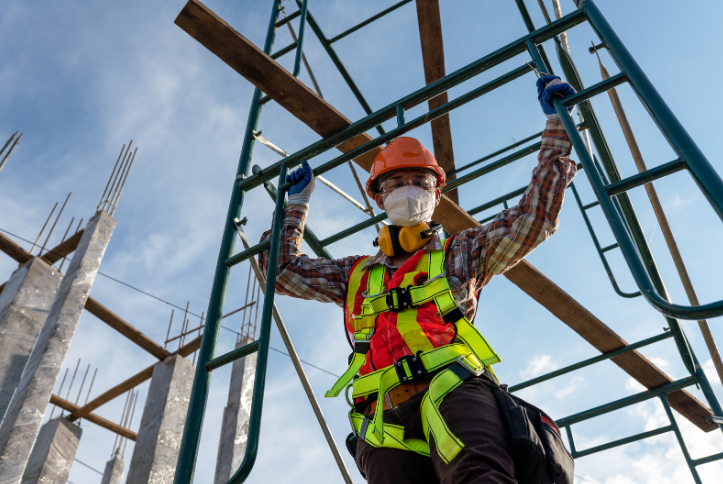
Act 31/1995 requires every company with employees to ensure their safety and health. It mandates developing a prevention plan, conducting a risk assessment, planning preventive activities, organizing preventive resources (in-house or external services), training and informing workers, monitoring their health and documenting all preventive activity. Non-compliance may result in Labour Inspectorate sanctions and, in serious cases, criminal liability.
A risk assessment identifies the hazards workers are exposed to, evaluates the associated risk and determines the necessary preventive measures. It must be carried out at the start of operations and updated whenever working conditions change, new equipment or substances are introduced, or an accident occurs. It is the foundational document of the preventive system and must be available for Labour Inspectorate review.
Business Activity Coordination (CAE) requires companies sharing a workplace with contractors or subcontractors to coordinate their preventive activities. The host company must verify that concurrent companies meet their OHS obligations, exchange information on risks and designate a preventive resource when activities are particularly hazardous.
Companies must draw up and retain preventive documentation including the prevention plan, risk assessment and preventive planning as required by the LPRL. All this documentation must be available to the Labour Inspectorate and the Labour Authority.
Sabentis centralizes all preventive management required by the LPRL: risk assessment with cascading inheritance by role and workplace, preventive planning with real-time monitoring, CAE with a collaborative contractor portal, health surveillance with fitness-for-role records, training with full traceability and delta@ integration. Dual ISO 27001 and ENS certification reinforces the security of health data processing.
ColombiaOHS Management System and Decree 1072 in Colombia
In Colombia, the Occupational Health and Safety Management System (SG-SST) is regulated by Decree 1072 of 2015 and Resolution 0312 of 2019. It is mandatory for all companies with hired workers. The system must follow the PDCA cycle and generate auditable evidence at each stage.

The SG-SST is the set of elements for identifying, evaluating and controlling occupational risks. Decree 1072 of 2015 requires all companies with hired workers in Colombia to implement it. Resolution 0312 of 2019 defines the minimum standards based on the number of workers and the level of risk.
Chapter 6 of Decree 1072 establishes: an OHS policy, hazard identification and risk assessment (IPER), an annual work plan, a training programme, change management, accident investigation, a COPASST or OHS watchperson, and an annual internal audit. The system must follow the PDCA cycle and generate auditable evidence.
The COPASST is mandatory in companies with 10 or more permanent workers. It consists of equal numbers of employer and worker representatives, meets monthly and oversees SG-SST compliance. In companies with fewer than 10 workers the equivalent role is the OHS watchperson.
Resolution 0312 establishes different minimum standards depending on company size and risk level.
Sabentis centralizes all required elements: IPER with measure tracking, annual work plan, training with evidence, COPASST management with minutes, accident investigation with root cause analysis and contractor coordination. It generates complete traceability and exportable evidence for audits by the Ministry of Labour or the ARL.
ChileOHS and Act 16.744 in Chile
In Chile, the occupational safety system is structured around Act 16.744 on workplace accidents and occupational diseases. Companies manage prevention through mutual insurance funds and are required to set up Joint Hygiene and Safety Committees (CPHS) when they exceed 25 workers.

Act 16.744 establishes mandatory insurance against workplace accidents. It requires affiliation with a mutual insurance fund (ACHS, IST or Mutual de Seguridad), implementation of prevention measures and the creation of a Prevention Department in companies with more than 100 workers. Workplace accidents must be reported in accordance with the procedures established by SUSESO and the mutual funds.
The Joint Hygiene and Safety Committee is mandatory in every company with 25 or more workers. Made up of three employer representatives and three worker representatives, it meets monthly to investigate accidents and recommend safety measures. DS 54 regulates its establishment.
Decree 76 requires the principal company to implement an OHS Management System when more than 50 workers — including both own staff and contractors — are present on site. The principal company is responsible for preventive coordination and must ensure its contractors comply with OHS requirements.
The mutual funds (ACHS, IST and Mutual de Seguridad) administer accident insurance and provide prevention advisory services. Accidents must be reported within 24 hours. SUSESO oversees the system at the national level.
Sabentis manages Joint Committees (CPHS) with minutes, role-based risk assessments, contractor coordination under Decree 76, inspections with photographic evidence and accident investigation with reporting to the mutual fund. It generates exportable documentation for SUSESO.
ArgentinaOccupational Health and Safety in Argentina
In Argentina, the discipline is called HyST — Higiene y Seguridad en el Trabajo (Occupational Hygiene and Safety). The regulatory framework is structured around Act 19.587 and Act 24.557. The SRT is the supervisory body and companies must affiliate with an ART to provide coverage for their workers.

Act 19.587 of 1972 establishes the minimum OHS conditions in all workplaces. Its main regulation is Decree 351/79, which details the technical requirements for building conditions, lighting, ventilation, machinery and personal protective equipment.
The ART covers contingencies arising from accidents and occupational diseases. Every company with employees must affiliate, declare its payroll and report accidents within 24 hours. The SRT supervises both the ARTs and the companies.
SRT Resolution 886/2015 establishes the mandatory Ergonomics Protocol for all companies. It requires the identification and assessment of ergonomic risk factors using validated methodologies and the adoption of corrective measures. Sabentis integrates ErgoTutor AI, which directly addresses this local regulatory requirement.
The RGRL allows companies to declare the risk agents present in their facilities to the SRT. Its submission is mandatory and must be updated whenever production processes change. It is the starting point for the risk assessment.
Sabentis supports preventive management in Argentina: RGRL, ergonomic assessments aligned with SRT Resolution 886/2015 via ErgoTutor AI, internal preventive participation bodies, training with traceability and contractor coordination. It generates documentation required by the SRT and ARTs in exportable format.
PeruOHS and Act 29783 in Peru
In Peru, Act 29783 and DS 005-2012-TR establish occupational health and safety obligations. SUNAFIL supervises compliance. All organizations must manage OHS in accordance with Act 29783, with specific obligations depending on the number of workers.

Act 29783 requires the implementation of an OHS Management System, the completion of the IPERC, the preparation of the RISST where required by applicable regulations, the establishment of the CSST where applicable, periodic audits and the reporting of accidents to SUNAFIL. DS 005-2012-TR details the technical requirements.
The IPERC is the process for identifying hazards, assessing the risk level and defining controls. It is the central element of the Management System in Peru, must be carried out in a participatory manner, updated periodically and available for SUNAFIL inspection.
The OHS Committee is mandatory in companies with 20 or more workers. Made up of equal numbers of employer and worker representatives, it meets monthly and oversees management system compliance. In companies with fewer than 20 workers the equivalent role is the OHS supervisor.
SUNAFIL is the body of the Ministry of Labour that supervises OHS regulatory compliance in Peru. It can impose fines depending on the severity and the number of workers affected. The most frequent violations are outdated IPERC, absence of a CSST and lack of documented training.
Sabentis supports preventive management in line with Act 29783: IPERC with control tracking, CSST with minutes, training with traceability and accident investigation with SUNAFIL reporting. It enables the generation of traceable and auditable documentary evidence at every stage of the preventive process.
MexicoOHS, NOM-STPS and NOM-035 in Mexico
In Mexico, occupational health and safety is governed by the Federal Labour Act and the Official Mexican Standards (NOMs) issued by the STPS. NOM-030-STPS establishes preventive services and NOM-035-STPS regulates psychosocial risk factors.

The NOM-STPS are Official Mexican Standards issued by the STPS that are mandatory for all workplaces in Mexico. They regulate more than 40 specific conditions: electrical installations, hazardous substance handling, work at height, ergonomics and psychosocial risk factors.
NOM-030-STPS establishes the requirements for preventive safety and health services in workplaces. It requires a safety conditions diagnosis, a safety and health programme and designated responsible personnel. Workplaces must have a Safety and Hygiene Commission in accordance with NOM-019-STPS.
NOM-035-STPS, in force since 2019, requires the identification and assessment of psychosocial risk factors. Workplaces with more than 50 workers must carry out periodic assessments, implement control measures and maintain documentary records. It is one of the standards with the greatest impact on recent preventive management in Mexico.
The STPS and IMSS require evidence of: training certificates, Safety and Hygiene Commission records, inspection tour minutes, safety conditions diagnosis, psychosocial risk assessments (NOM-035), incident records and action plans derived from each assessment.
Sabentis centralizes preventive management in line with the NOM-STPS: role-based hazard identification, Safety and Hygiene Commission with minutes, training with evidence, psychosocial risk assessment (NOM-035), mobile offline inspections and incident investigation. It generates STPS-required documentation in exportable, traceable format.
MalaysiaOHS and the Occupational Safety and Health Act in Malaysia
In Malaysia, occupational health and safety is primarily regulated by the Occupational Safety and Health Act 1994 — Act 514, updated by the amendments that came into force in 2024. The Department of Occupational Safety and Health — DOSH is the competent authority under the Ministry of Human Resources. The legislation requires employers to ensure a safe working environment, assess and control risks, provide training and information, maintain preventive documentation and report accidents where applicable.
OSHA 1994 requires employers to ensure, so far as is reasonably practicable, the safety, health and welfare of their workers: safe systems of work, risk control, training, instructions and supervision. The recent amendments reinforce the obligation to carry out risk assessments and apply control measures.
DOSH supervises compliance with OHS regulations. It can inspect, verify records, require corrective measures and act in response to accidents or hazardous situations. Employers must notify accidents, dangerous occurrences and occupational diseases within the established timeframes.
SOCSO/PERKESO manages the social protection linked to accidents and occupational diseases. Companies must register their workers, make contributions and report accidents in accordance with the established procedures.
The OSH Coordinator coordinates OHS management internally. It is mandatory for employers with 5 or more employees at workplaces that do not require a Safety and Health Officer — SHO. The Safety and Health Committee is mandatory with 40 or more workers or when required by the Director General of DOSH.
Sabentis supports through risk assessment, preventive planning, incident recording, training traceability, internal inspections, contractor coordination and evidence generation for DOSH and SOCSO/PERKESO.
Saudi ArabiaOHS and labour regulations in Saudi Arabia
In Saudi Arabia, OHS is regulated through the Labour Law, the provisions of the Ministry of Human Resources and Social Development — HRSD and the social insurance system managed by GOSI. Vision 2030 acts as the strategic labour transformation framework, but concrete obligations derive from labour legislation and ministerial resolutions.
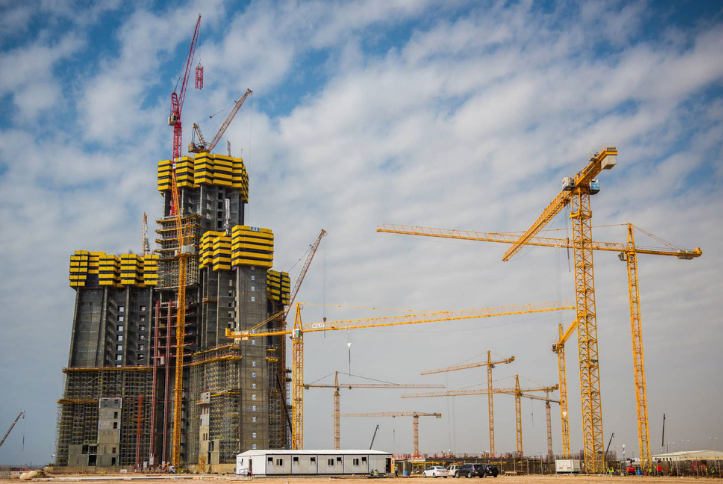
It requires employers to protect workers from occupational risks, maintain adequate hygiene and ventilation conditions, provide PPE, and inform and train workers about the risks of their role.
HRSD regulates labour relations and supervises OHS compliance. It can inspect, verify documentation, require corrective measures and sanction. It requires the maintenance of records, the documentation of processes and the existence of accident investigation procedures.
GOSI manages the coverage of accidents and occupational diseases for both Saudi and non-Saudi workers. Accidents must generally be reported within 3 days from when the employer becomes aware of the accident.
It has driven greater requirements for management, documentation and training. Certain activities must have OHS professionals depending on size and sector, including construction, oil, mining, manufacturing and petrochemicals.
Through risk assessment, document management, incident recording and investigation, training traceability, inspections, contractor coordination and evidence generation for HRSD and GOSI.
ParaguayOHS and labour regulations in Paraguay
In Paraguay, OHS is regulated by the Labour Code — Act 213/93 and Decree 14.390/92, which approves the General Technical Regulation on Safety, Hygiene and Occupational Medicine. The MTESS supervises compliance and the IPS manages social security coverage.

The employer must guarantee safe conditions, adopt preventive measures, assess and control risks, provide training and information, and comply with obligations related to medical examinations, accident reporting and workplace conditions.
MTESS supervises labour and preventive compliance. It can inspect workplaces, verify documentation, interview workers and act on non-compliance or hazardous conditions.
IPS manages social coverage including workplace accidents. Companies must register workers, make contributions and report accidents within 8 days from when the employer becomes aware of the accident.
It regulates the minimum conditions for occupational safety, hygiene and medicine. For establishments with 100 or more workers, the Internal Accident Prevention Committee — CIPA is required. Documentary obligations vary according to size and type of activity.
Through risk assessment, accident recording, evidence generation for MTESS and IPS, training traceability, inspection management, contractor coordination and document centralization.
Want to dive deeper into OHS regulations in your country?
Visit our blog →
 5
5